

Africa is not simply the market of tomorrow. It is one of the markets being reshaped today.
Across the continent, businesses are navigating a remarkable period of transformation. Technology is changing how companies operate. Consumers are becoming more informed and demanding. African businesses are expanding beyond traditional markets. Artificial intelligence is moving from experimentation into practical business applications. At the same time, investors, customers, employees and regulators are paying closer attention to how organisations communicate, behave and create value.
For executives, this presents both an opportunity and a challenge.
The companies that thrive in the next decade will not necessarily be the biggest companies today. They will be the organisations capable of understanding change early, communicating their value clearly, building trust consistently and adapting faster than their competitors.
At Jujaya Media, we believe the future of African business will be shaped not only by what companies build, sell or invest in, but also by how effectively they tell their stories, demonstrate their impact and position themselves in an increasingly competitive marketplace.
The Executive Perspective
The future belongs to organisations that can combine innovation with strategic communication, measurable impact, trusted leadership and the ability to adapt quickly.
01. Artificial Intelligence Will Move From Experimentation to Business Strategy

Artificial intelligence is quickly becoming more than a technology conversation.
For African businesses, AI has the potential to transform customer service, marketing, financial analysis, logistics, content production, research, operations and decision-making.
The important question for executives is no longer simply:
It is:
Companies are already exploring AI-powered customer support, automated workflows, predictive analytics, personalised marketing and intelligent internal knowledge systems.
However, technology alone will not create competitive advantage.
The real advantage will come from organisations that combine AI with human judgement, creativity, local market knowledge and strong strategic thinking.
Executives should therefore begin identifying processes that can be automated, decisions that can be improved through data and customer experiences that can be personalised through technology.
The businesses that use AI thoughtfully will have an opportunity to operate faster and potentially more efficiently than organisations that treat it as a passing trend.
Trend 0202. African Businesses Will Become More Intentional About Their Brands

For years, many businesses focused primarily on products, services, distribution and price.
Those factors still matter.
But in increasingly competitive markets, perception is becoming an important business asset.
Two companies may offer similar products, operate in the same market and target the same customers. Yet one can command greater attention, trust and loyalty because it has built a stronger brand.
This is particularly important as African businesses expand across borders.
A company entering a new market must communicate more than what it sells.
- What it stands for
- Why it exists
- What makes it different
- Who is behind it
- What impact it creates
- Why customers should trust it
This is where strategic branding, public relations and corporate storytelling become increasingly valuable.
A strong brand is no longer just a logo or colour palette.
It is the story people tell about your organisation when you are not in the room.
Trend 0303. Reputation Will Become a Boardroom Issue

Reputation used to be treated primarily as a communications concern. That is changing.
In today’s environment, reputation can influence customer decisions, investor confidence, employee attraction, partnerships and even an organisation’s ability to operate effectively.
One poorly handled crisis can spread across social media within minutes.
One strong executive interview can change how an industry perceives a company.
One well-documented impact story can strengthen stakeholder confidence.
Organisations need crisis communication plans, media protocols, trained spokespeople and a clear understanding of their public narrative before a crisis occurs.
The best time to build a reputation strategy is before you need one.
Trend 0404. Storytelling Will Become a Competitive Advantage

Africa is filled with remarkable businesses. Yet many of their stories remain largely untold.
A company may have created hundreds of jobs, transformed communities, developed innovative technology or built an impressive African supply chain—but if nobody knows about it, the impact may remain invisible beyond its immediate stakeholders.
This is where corporate storytelling becomes powerful.
Storytelling translates
Data into meaning. Projects into narratives. Impact into emotion. Expertise into authority.
Consumers increasingly want to understand the people and purpose behind the brands they support.
Investors want evidence of value. Partners want credibility. Employees want purpose. The media wants compelling stories.
A company that can communicate all of this effectively has an advantage.
Trend 0505. African Companies Will Think Beyond Their Home Markets
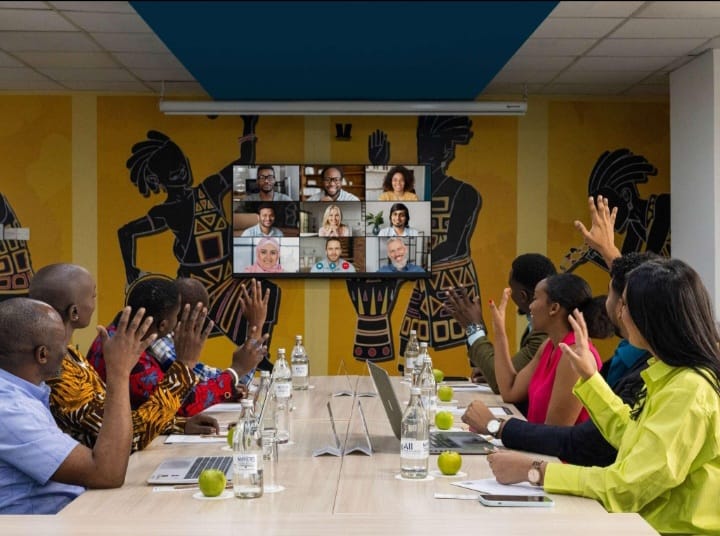
The next generation of African businesses will increasingly think continentally.
Companies that began in Nairobi, Lagos, Accra, Johannesburg, Kigali, Cairo or Casablanca can increasingly find customers, partners, talent and investors across borders.
Technology has reduced some of the barriers to entering new markets.
But expansion brings another challenge:
Market entry requires more than advertising.
Businesses need local insight, stakeholder engagement, media visibility, partnerships, cultural understanding and credible positioning.
The future African brand will increasingly need to be both locally relevant and globally credible.
Trend 0606. The Rise of the Executive as a Brand

People increasingly want to know the people behind organisations. This is changing the role of the CEO.
Executives are no longer expected to communicate only through annual reports, press releases or occasional interviews.
They are becoming public voices.
A strong executive profile can help:
- Build corporate credibility
- Attract investors
- Strengthen partnerships
- Attract talent
- Influence industry conversations
- Humanise the organisation
- Create media opportunities
Platforms such as LinkedIn have accelerated this shift.
But executive visibility should not become a vanity exercise. The objective is not simply to post more.
It is to build thought leadership.
07. Impact, ESG and Sustainability Will Require Better Storytelling
Businesses are increasingly being asked to demonstrate the impact they create.
Whether it is employment, environmental sustainability, community investment, innovation, inclusion or social development, stakeholders increasingly want evidence.
But there is an important distinction between doing good and communicating impact effectively.
A company may invest millions in communities but struggle to explain what changed as a result.
A credible impact narrative answers
What was the problem? What did we do? Who benefited? What changed? What evidence supports the impact? What happens next?
This approach transforms corporate social responsibility from a collection of activities into a credible impact narrative.
It gives stakeholders something they can understand, verify and believe.
Trend 0808. Data Will Influence More Business Decisions

The African business environment is becoming increasingly data-driven.
Executives now have access to more information about customers, markets, campaigns, operations and competitors than ever before.
But data itself is not the advantage.
The advantage is knowing what to do with it.
Marketing teams can measure campaign performance. Communications teams can monitor media sentiment. Executives can track customer behaviour. Businesses can identify emerging market opportunities.
Organisations can also measure the effectiveness of their communication strategies.
This means future-facing businesses will increasingly combine creativity with evidence.
For African businesses, this represents a major opportunity to move from assumptions to evidence-based decision-making.
Trend 0909. Trust Will Become One of the Most Valuable Business Assets

Africa’s markets are becoming more connected.
Information travels quickly. Customers can compare businesses instantly. Employees can publicly discuss their experiences. Investors can research companies before entering a conversation. Consumers can challenge corporate claims.
In this environment, trust becomes increasingly difficult to manufacture and increasingly valuable to earn.
Companies that consistently communicate honestly, respond responsibly and demonstrate their promises will have an advantage.
“Visibility without credibility can become noise.”
Trust is built through consistency. It comes from what a company says, what it does and whether those two things align.
That is why modern communications cannot simply be about visibility. The objective should be to build credible visibility—the kind that strengthens relationships rather than simply generating impressions.
Trend 1010. The Companies That Adapt Fastest Will Win

Perhaps the biggest trend of all is the speed of change.
Technology will continue evolving. Consumer expectations will change. New competitors will emerge. Markets will shift. New platforms will appear. Economic conditions will fluctuate.
The organisations that succeed will therefore need to become learning organisations.
Adaptive organisations
Experiment. Listen. Measure. Learn. Adapt. Communicate.
This does not mean chasing every trend.
It means understanding which changes matter to your organisation and responding deliberately.
The future does not belong to companies that predict everything correctly. It belongs to companies that adapt intelligently when the future changes.
What This Means for African Executives
These ten trends point toward a broader shift in how businesses need to think about growth.
The traditional model was often:
The Traditional Model
Build → Sell → Advertise → Grow.
The emerging model is more interconnected:
The Emerging Model
Build → Communicate → Build Trust → Demonstrate Impact → Influence → Grow.
This is why communication is increasingly becoming a strategic business function rather than simply a marketing support activity.
Your reputation affects your opportunities. Your story affects your visibility. Your executive profile affects your influence. Your digital presence affects perception. Your impact communication affects stakeholder confidence.
And your ability to communicate clearly can determine whether a good business remains invisible or becomes a recognised industry leader.
The Opportunity Ahead

Africa’s business story is still being written.
From technology and financial services to healthcare, manufacturing, logistics, agriculture, energy, tourism and professional services, companies across the continent are building solutions for some of the world’s most complex challenges.
But building something valuable is only part of the journey.
The market needs to understand your value. Investors need to see the opportunity. Customers need to understand the difference. Partners need to trust the organisation. Employees need to believe in the mission. And the wider public needs to understand the impact.
That requires more than advertising.
It requires strategy, storytelling, media intelligence, public relations, digital communication and a clear understanding of the audience.
From Stories to Strategic Influence

At Jujaya Media, we believe African businesses have powerful stories waiting to be told.
Our work sits at the intersection of public relations, strategic communications, media, digital storytelling, brand positioning and business visibility.
We help organisations move beyond simply being seen to becoming understood, trusted and remembered.
Strategy. Story. Influence.
The opportunity is to bring strategy, meaningful stories and measurable impact together to build the reputation, relationships and opportunities that will shape tomorrow.
Because visibility without strategy is temporary.
A story without substance is forgettable.
And impact without communication can remain invisible.
The opportunity is to bring all three together.
Final Thought

The future of African business will not be defined by technology alone.
It will be defined by people, ideas, trust, innovation, adaptability and the ability to communicate value in a world that is becoming increasingly crowded with information.
For executives, the question is no longer simply:
The more important question may be:
The organisations that answer that question early will be better positioned to lead the next chapter of Africa’s business story.
The future is coming. The smartest businesses are already preparing for it.
About Jujaya Media
Jujaya Media is a strategic communications, public relations and media company helping organisations transform their stories into influence.
From corporate communications and PR to digital storytelling, executive visibility, brand positioning and impact communication, we work with organisations that want to build stronger reputations and communicate their value with clarity.
Stories That Move People. Evidence That Moves Donors.
Turning Impact into Influence.
Executive Discussion
The point about executive visibility is particularly relevant. African businesses have strong leaders and strong stories, but many still don’t communicate their expertise consistently.
AI and trust are going to be especially interesting. Businesses will have to adopt technology without losing the human connection that makes customers trust them.